
Today's protest from dump truck drivers may have little impact on Toronto cyclists, since it is being limited to the expressways. Of course, there will be spill-over in the congestion, just like north end cyclists saw last night when part of the 401 was closed. All nearby arterial streets became parking lots, overflowing into the neighbourhood streets.

Drivers are complaining about overloaded trucks, long hours and high diesel prices.

Dump Truck

The part of the story that concerned me was this:

``The brake system is designed for a load of 21 tonnes. When the truck is eight or nine tonnes overloaded, the momentum doesn't let you stop unless you really stand on the brakes."

That'll definitely be on my mind next time I take the lane in front of a dump truck.

Through various media outlets, the drivers are asking for public support, which makes one ask where the responsibility lies. The drivers may not know the exact weight of their load, but surely they can eye the difference between 21 tonnes of gravel and 29 tonnes. Once leaving the work site, it's the driver who gets charged, but the drivers are blaming the contractors they work with.

Even worse, he said, is that drivers who question overweight loads are often banished from a work site.

After being banished, wouldn't that driver go give a tip to the Ministry of Transportation? Are there no spot checks? It seems there's a good load of blame to go around.

So while a certain amount of the responsibility for overloading lies with the dump truck driver, at least they are drawing attention to the issue. I can only hope the provincial government considers this important enough to improve enforcement.

Photo credit Kenworth Dump Truck by Ashman 88
Here are a couple of interesting local cycling news items from today's papers.

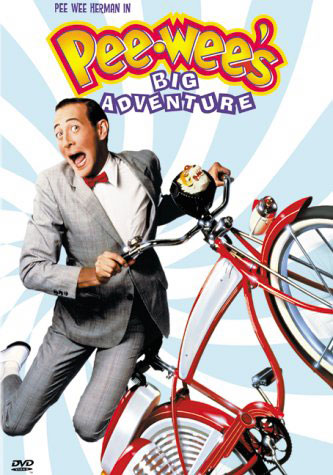
First of all, Chart Attack Magazine has an article about the upcoming Toronto Cyclists Union fundraiser on May 29th. The Bike Union will be screening Pee-Wee's Big Adventure at the Bloor Cinema, supported by a live cast who will act it out at the same time! The cast includes various local musicians, cycling and public space activists, and even Cycling Committee chair and City Councillor Adrian Heaps. More info about the event is also available in our calendar.

The Globe and Mail has an article titled Cycle mania hits high gear; good luck getting tune-up. Spring is always a busy time for bike shops, as people always seem to wait until the last minute to pull their bikes out of their garages/basements before hitting the road again. This puts a strain on the bike shops who can't keep up with the demand. Susan Krashinsky investigates the situation and tries to find out why it's even worse this year.

Last week, Toronto Police Services 11 Division sent out an email regarding a week-long bicycle safety blitz starting today. The blitz covers various parts of 11 Division, including The Junction, High Park, Roncesvalles, and Bloor West Village.

They will be cracking down on cyclists who disobey traffic rules, especially sidewalk cycling. They really made sure to spell out the details of the sidewalk cycling bylaws and how they are enforced. No word on whether they will also crack down on motorists parked in the Runnymede bike lane, joggers in the High Park bike lane, or motorists doing crazy stuff pretty much wherever they please.

You can read the text of the email below.

The 11 Division Traffic Unit has received a number of community complaints related to traffic safety issues within the division. In High Park both bicycles and motor vehicles frequently speed and fail to obey stop signs within the park. Additionally, bicycles ridden on the sidewalk endangering pedestrians is a problem in Bloor West Village, The Junction and in Roncesvalles Village.

A traffic safety initiative to address these concerns comprised of both enforcement and educational components will commence on Monday 05 May 2008 and conclude on Sunday 11 May 2008. Any traffic related concerns can be directed to 11 Division’s Traffic Unit by phoning 416-808-1100.

Sidewalks are for Pedestrians. Pedestrians use sidewalks to travel safely along busy city streets. During the summer months sidewalks are congested with pedestrians, cafes and vendors. When cyclists, in-line skaters and scooters are also involved, conflicts arise that could be prevented.

A City bylaw allows cyclists with a tire size of 61cm or 24 inches or less to ride on the sidewalk. The intent of this bylaw is to allow young children to cycle on the sidewalk while they learn to ride. The bylaw is based on wheel size because it is difficult for Police to enforce age-based bylaws, as most children do not carry identification. This is a municipal bylaw and rules vary in communities across Ontario. The Toronto bylaw states that riding a bicycle with tire size over 61cm (24 inches) on sidewalks is prohibited, as is riding/operating a bicycle (or roller skates, in-line skates, skateboard, coaster, toy vehicle) on a sidewalk without due care and attention and reasonable consideration for others. The fine in downtown Toronto for not following this bylaw is $90 and aggressive cyclists can also be charged with careless driving.

There are many hazards involved when cycling on the sidewalks. If a cyclist hits a pedestrian, the injuries can be severe. Seniors are especially vulnerable and can fall merely by being startled. Anyone with a visual or hearing impairment is at increased risk. Many cyclists ride on the sidewalk because they are afraid of cars. But choosing to ride on the sidewalk does not eliminate the risk of a car and bike collision. Cycling on the sidewalk is a contributing factor in 30 per cent of car and bike collisions. Collisions occur when cyclists ride off the sidewalk into the roadway or when motorists are exiting a laneway or driveway.

What to teach young cyclists about cycling on the sidewalk:

  • Always yield to pedestrians. Get off and walk your bike or put your foot down.
  • Ride slowly.
  • Always walk your bike through a crosswalk or crossover (Fines apply if not followed).
  • Use a bell or horn to let pedestrians know that you are there.
  • Make eye contact with drivers. Assume that drivers don't see you.
  • Look for cars in driveways, laneways and at intersections and be prepared to stop.
  • Expect pedestrians to exit from stores.

To teach skills and give riders confidence in riding on the road, the City offers CAN-BIKE cycling courses for children and adults. Call 416-338-0000 to register or go to www.toronto.ca/cycling and click on CAN-BIKE.