insurance

Faulty 'no fault' definitions

As soon as the term 'no fault' comes up in discussing accidents, collisions and insurance there is a lot of confusion as to what 'no fault' means.

The Insurance Bureau of Canada does an excellent job of explaining how 'no fault' insurance works. It even attempts to clear up some of the confusion but misses out on a little history that would really help clear things up. I am going to try to sort things out for you by example. I have simplified things a great deal as there can be many exceptions and thresholds that apply.

Let us go back to the time when 'no fault' insurance did not exist. If I were to hit Herb in his Hummer with my Smart Car, Herb's insurance would pay for his damages. Then his insurer would sue my insurer to be compensated for the funds they paid out. This is pretty much how most civil suits outside of car insurance work to this day. The person suing must prove that the other person is the one at fault. This process would be the same if I had hit Herb while he was on his bicycle.

At the end of the year Insurance companies saw that their losses under this scheme were comparable to one another. In addition they had big legal bills to deal with. It was clear that the easiest way to save money was to stop suing one another and to just pay their insured directly.

Proposed auto insurance changes will negatively affect cyclists

The following email comes from Patrick Brown, a cyclist-supporting lawyer here in Toronto. Could cyclists be getting screwed over with insurance settlements in the future? Read on.

This morning I attended a stakeholders meeting with the Ministry of Finance regarding the new changes to auto insurance. It is now on the news.

The present law reform is not fair to cyclists, public transit users or pedestrians.
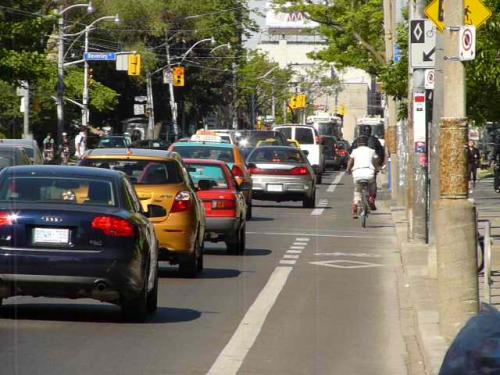
Today I specially asked whether the reduce benefits being proposed will apply to innocently injured cyclists, pedestrians and transit users. The answer was "yes".

The system here in Ontario is complex to say the least, but I will try to simplify as best I can the issue below.

When anyone [including cyclist, pedestrian car driver] is injured or killed by a bad driver[ even a drunk driver], they will have various benefits available to them. These include various things to help them get better. Medical benefits, rehab benefits, attendant care etc.

With the new changes introduced today, many benefits are being drastically reduced. However, the justification for such a reduction is "consumer choice".

The new insurance reforms provide an option to the auto insurance policy holders to increase the amount of their benefits if they so chose. They simply up the premium in the policy.

However, if you are a cyclist, pedestrian or transit user, and do not have a car insurance policy, you do not have the ability to buy up on your benefits. You have no policy to do so. You must accept these reductions.

Essentially your benefits (if you are part of this group) have just been drastically reduced without the choice of getting more coverage.

How significant are these changes to cyclist and pedestrians. The following are the amount of benefits being reduced.

  1. Medical Rehabilitation Benefits [non catastrophically injured] are being reduced from 100,000 to 50,000
  2. Attendant Care Benefits [for non catastrophically injured ] are being reduced from 72,000 to 36,000.00
  3. Housekeeping and caregiver benefits eliminated.

Are motorists shirking their responsibility? Yes.

There’s a feeling “out there” that because motorists pay “user fees” for licences and registration as well gas taxes and insurance, that they somehow have more “rights” to the road than everybody else. And that because motorists pay for those things, somehow motorists are more “responsible” that the rest of society which includes lowly cyclists.

Let’s dispel a myth today. It is my assertion that motorists are, in fact, acting much less responsible than they claim, and further, that they are to blame for a lessened quality of our public spaces.

First off, there are plenty of articles about who pays for the roads, including articles on this very blog. I’ll refer the reader there to read these entries, and I won't bother repeating those arguments.

My copy of the driver’s handbook, copyright 2007, has written in the second paragraph of Chapter 1 that would be motorists “have to pass a test” for “driving privileges.” What this means is that everybody has the same and equal right to share the road, but licensed drivers have the privilege of doing so with an insured and registered motor vehicle. That’s all. Somewhere along the way many seemed to have forgotten this.

Syndicate content
pennyfarthing ok frye