San Francisco is looking at how Toronto cyclists deal with streetcar tracks. The answer: not very easily. Toronto streetcar tracks have been the bane of many cyclists, both experienced and green. Being one of just a handful of North American cities with streetcars, Toronto could provide valuable information.
What can San Francisco learn from the Toronto experience? What ways can cities improve the safety for cyclists crossing tracks?
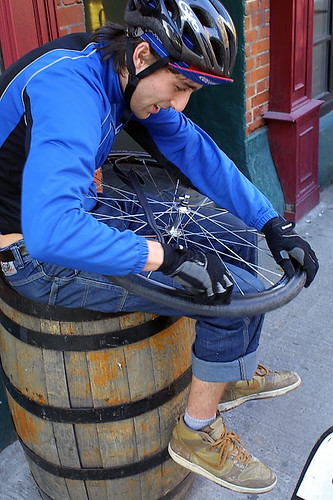
Experienced bicyclists tend to figure out the best way to navigate the tracks, but what can be done to prevent less-experienced bicyclists from getting stuck in the rail depressions so regularly?
In Toronto, where bicyclists also have to contend with a maze of tracks, several at-grade railroad crossings are equipped with a rubber flange filler that is jammed down into the cracks of trolley tracks. The rubber is firm enough that it doesn't compress when a bike passes over it, but when a streetcar comes it squishes down and doesn't cause the train to derail.
The material is not used for Toronto's extensive network of streetcar tracks in the city's core, however, and bikes routinely get caught in the tracks. "The at-grade railroad crossings do have some of that incorporated, but certainly not the main hazards to cyclists, which are the arterial road streetcar tracks," said Yvonne Bambrick, Executive Director of the Toronto Cyclists Union.
"There’s a lot of places where several tracks meet and turn. They’re trickier to navigate, but folks that have been at it for a while have figured out how to do it. It’s not that hard: you pay attention and learn how to do it, it’s all good. It does catch people fairly regularly."